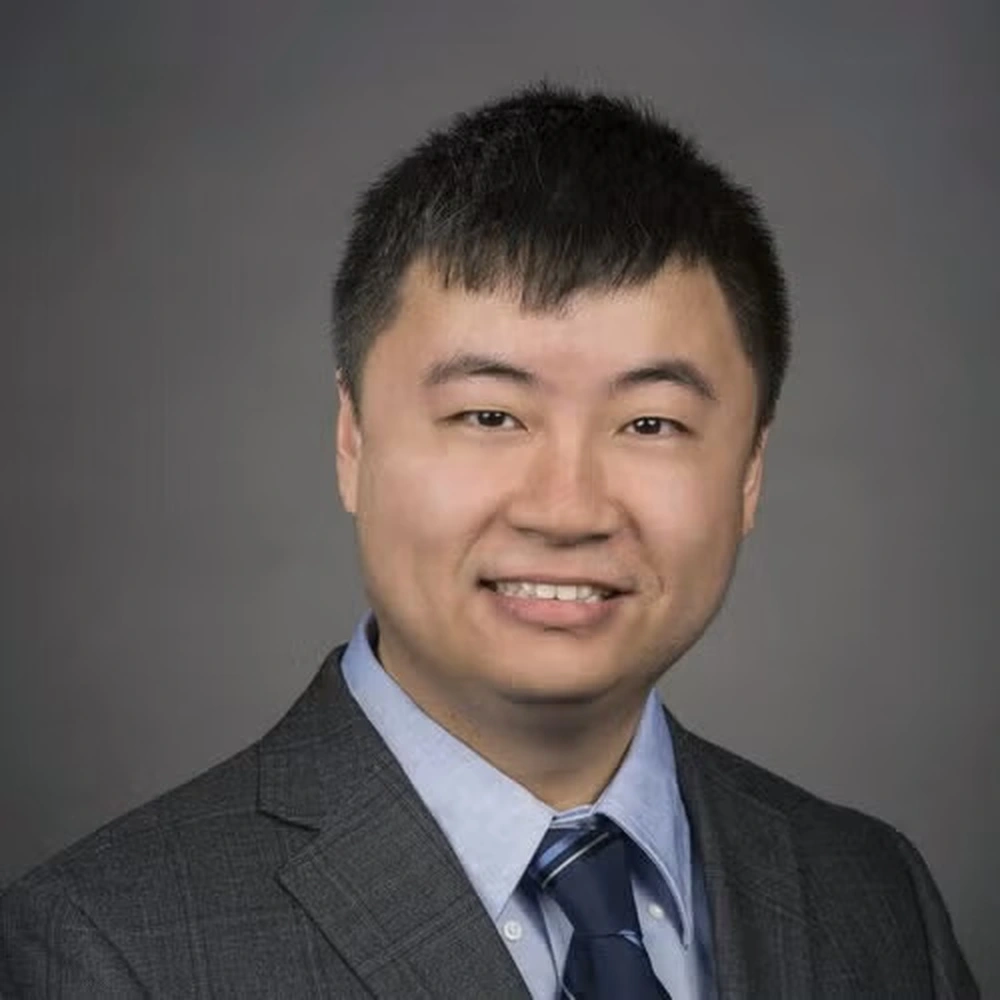
Xiaochen Jing is an assistant professor in the Actuarial Science & Risk Management program at the University of Illinois Urbana-Champaign.
His research covers several areas in risk management, most notably insurance product innovation and design, evaluating modern life insurance policies with a focus on the valuation, hedging, and structure of variable annuities.
Jing teaches several courses on campus and has been included in the Center for Innovation in Teaching & Learning’s List of Teachers Ranked as Excellent by Their Students multiple times.
Tell us a little about your background. What led you to actuarial science?
I joined the Actuarial Science & Risk Management program at the University of Illinois Urbana-Champaign right after completing my PhD in Actuarial Science, Risk Management, and Insurance at the University of Wisconsin–Madison. Before that, I earned my master’s degree in actuarial science at U of I, so it has been great to come back.
When I first came to the US for my master’s degree, I planned to become an actuary and work in industry after graduation. That changed after I met professor Runhuan Feng at U of I.
He guided me through several academic research projects, and I found that I really enjoyed the research process. That experience led me to pursue a PhD in actuarial science and eventually an academic career.
What is your research focused on?
My research mainly focuses on innovative insurance products, including their design, markets, and policyholder behavior, mostly from an empirical perspective.
One area I study is variable annuities, which combine protection against mortality risk and financial market risk. These products are also known for having complex structures. One question I am interested in is whether that complexity helps policyholders better manage their portfolios and consumption needs, or whether it can instead make products harder to understand and potentially more costly for consumers via intentional obfuscation.
What excites you most about the work you do? What do you like most about doing that work at U of I?
I have always liked the idea of solving mysteries, and understanding randomness. Insurance is fundamentally about learning, managing, and pricing uncertainty and risk, so that has always felt like a good fit for me.
What I enjoy most about working at U of I is the people. I am fortunate to have supportive colleagues and talented students, and the environment makes both research and teaching very enjoyable. U of I was also my first stop in the US as an international student, coming back here has a special meaning for me. In many ways, it feels like a second home.
What research project(s) are you currently working on? Why is your research important?
One of my more recent research interests is decentralized finance (DeFi) insurance.
Unlike conventional insurance, where many policyholders are insured by one centralized insurer, DeFi insurance can involve many policyholders and many insurance providers or risk bearers. This creates interesting questions about how functions that are traditionally centralized (such as premium pricing, underwriting, and claim assessment) can instead be carried out through decentralized mechanisms and collective decision-making.
The digital asset market also provides a unique research setting because much of the premium, coverage, and claim information is recorded on the blockchain. This creates opportunities to study insurance markets with unusually detailed and transparent transaction-level data.
What misconceptions do students usually have about actuarial science?
I would not necessarily call it a misconception, but people sometimes think actuarial science is mainly about being conservative or avoiding risk
In reality, actuaries do not simply avoid risk. A large part of actuarial work is understanding which risks are worth taking, how much risk is appropriate, and how those risks should be priced and managed.